Borrowed Names, Shared Homes
Folake, a Yoruba woman from Ibadan, and Terver, a Tiv man from Makurdi, had met during their undergraduate years at the university, argued about everything for two years, but later got married anyway
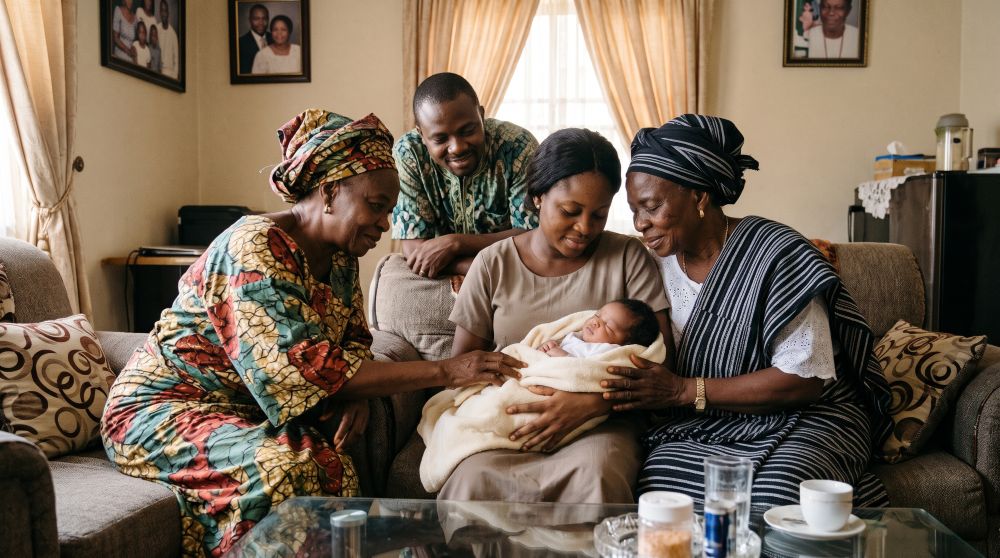
The new born baby was eight days old and already at the centre of a diplomatic crisis.
Folake, a Yoruba woman from Ibadan, and Terver, a Tiv man from Makurdi, had met during their undergraduate years at the university, argued about everything for two years, but later got married anyway. Now their daughter had arrived, and both grandmothers had turned up in Lagos with a name. “We’ll name her Oluwaseun,” announced Folake’s mother. “We thank God.” “No! Aondona is perfect,” said Terver’s mother, folding her arms. “God is good.”
Somebody’s phone buzzed. Then Folake’s father cleared his throat. “Madam, am I the only one hearing this? Both names are saying the same thing.”
Finally, the baby was named Oluwaseun Aondona. By evening, the two grandmothers sat side by side, comparing notes on the shortcomings of their children, as grandmothers across Nigeria have done since forever.
This story is not rare. Walk through any estate in Lagos, Abuja, Port Harcourt or Kaduna and you will meet versions of it. The Igbo man whose Edo wife makes the best banga on the street. The Hausa girl raised by an aunt from another state after her mother passed, who answers to three nicknames in three languages. The boy adopted into a family in Jos who now argues in Hausa, prays in English and has friends of different tribes.
Nigeria is full of families whose identities cannot fit comfortably into one ethnic box. Children born to parents from different regions. Families that have adopted children across communities. Households where multiple languages compete for attention at the dinner table.
These families are not less Nigerian because their histories are mixed. They are reminders that belonging can be larger than ancestry. That does not mean cultural and religious differences are insignificant. Intercultural marriages require patience, compromise and sometimes difficult conversations.
But perhaps those conversations offer a lesson for the wider country. You can honour where you come from without rejecting where someone else comes from.
You can preserve your traditions without treating another person's traditions as a threat.
And you can love your family without inheriting every prejudice your family holds.
When Oluwaseun Aondona grows older, she may discover that the country she belongs to is still arguing over who truly belongs.
Hopefully, she will also know something many adults are still learning.
Nigeria does not become weaker when our stories meet. Sometimes, that is exactly how a stronger country begins.